Extravagant Crystal Chandelier for Grand Foyer
This article examines the design, construction, and application of extravagant crystal chandeliers intended for grand foyer spaces. These luminaires are characterized by their substantial size, intricate designs, and prominent use of crystalline elements.
The concept of decorative lighting in grand spaces has a long history, with early forms often relying on oil lamps Buyance or candles. The introduction of the chandelier, however, marked a significant evolution, allowing for a more concentrated and impressive display of light.
Early Illuminations and the Birth of the Chandelier
Prior to the widespread adoption of electricity, chandeliers were practical fixtures as well as decorative objects. Their purpose was to provide a significant amount of light, crucial for large rooms like ballrooms and banquet halls. Early chandeliers were often constructed from iron or wood, with candleholders arranged strategically to maximize illumination. The development of specialized tools and techniques allowed for increasingly elaborate metalwork, laying the groundwork for more ornate designs.
The Rise of Crystal and its Impact
The incorporation of crystal into chandelier design emerged as a significant turning point. Initially, rock crystal was used, but later, cut glass, particularly lead crystal, became the material of choice. The refractive and reflective properties of crystal were exploited to create a dazzling display of light. The facets cut into the crystal would break white light into its constituent colors, creating a prismatic effect that added movement and sparkle. This innovation transformed the chandelier from a purely functional item into a statement piece, capable of transforming the ambiance of a space.
Mechanization and Mass Production
As technology advanced, so did the methods of chandelier production. The Industrial Revolution brought about mechanization, enabling the mass production of chandelier components. This made these once-exclusive items more accessible, though true “extravagant” pieces remained the purview of the wealthy and influential. The ability to create identical components allowed for greater complexity and uniformity in design.
The Electric Era and Modern Adaptations
The advent of electricity in the late 19th and early 20th centuries revolutionized chandelier design once more. The need for candleholders was eliminated, allowing for entirely new forms and the integration of electrical wiring directly into the structure. This ushered in an era of larger, more elaborate designs that were previously impossible to illuminate safely and effectively. Modern interpretations continue this tradition, often blending traditional aesthetics with contemporary materials and lighting technologies.
Design Principles and Aesthetic Considerations
The design of an extravagant crystal chandelier for a grand foyer is a complex interplay of form, material, scale, and intended effect. These fixtures are not merely light sources; they are sculptural elements that contribute significantly to the overall architectural narrative of the space.
Scale and Proportion
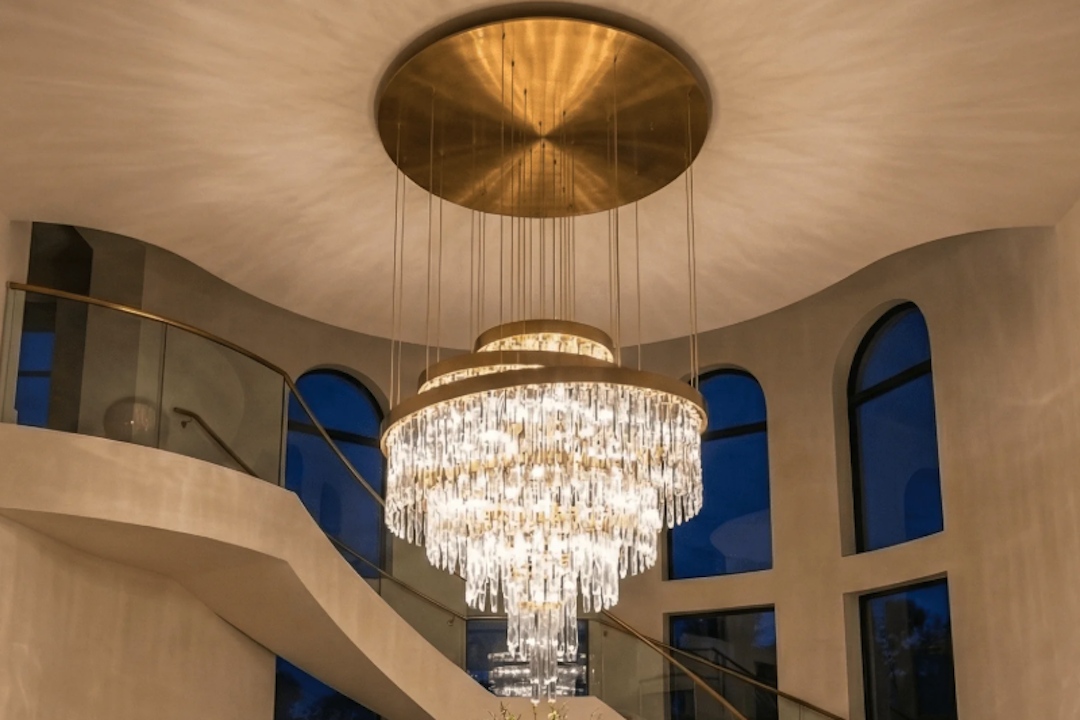
The sheer size of these chandeliers is a defining characteristic. They are engineered to command attention within expansive spaces, often taking center stage in a foyer or ballroom. The scale must be carefully considered in relation to the ceiling height and the dimensions of the room. A chandelier that is too small can appear insignificant, lost in the vastness of the space, while one that is too large can feel overwhelming and out of place. Architects and designers often utilize calculations or guidelines to ensure appropriate proportionality, treating the chandelier as an extension of the room’s architecture.
Crystalline Components and their Arrangement
The “crystal” in these chandeliers is typically lead crystal, prized for its brilliance and ability to refract light. The arrangement of these crystalline elements is paramount to the chandelier’s aesthetic.
Types of Crystal Elements
- Prisms and Pendeloques: These elongated, faceted crystals are often suspended in cascading arrangements. Their pointed or teardrop shapes catch and scatter light effectively.
- Baguettes and Marcasites: Straighter, more geometric cuts like baguettes can be used to create linear patterns or frames. Marcasites, smaller faceted beads, are often used to fill gaps and add texture.
- Bowls and Cups: Larger, bowl-shaped or cup-like crystal elements can serve as shades for individual lights or as structural components of the chandelier.
- Cut and Faceted Spheres: Round crystal elements, meticulously cut and faceted, add a more uniform sparkle and can be used as focal points or connecting elements.
Motifs and Patterns
Designers employ various motifs and patterns using these crystalline components. Swags of prisms, tiered arrangements, or intricate latticework of smaller crystals are common. The way light interacts with these different cuts and arrangements creates a dynamic visual experience, shifting and changing as the viewer moves or as light sources fluctuate.
Metalwork and Structural Integrity
The framework that supports the crystal elements is typically crafted from metal. Materials such as brass, bronze, or wrought iron are commonly used, often with decorative finishes like polished, antique, or gilded. The metalwork not only provides structural support but also contributes to the overall aesthetic, complementing or contrasting with the sparkle of the crystal. The design must ensure robust structural integrity to support the considerable weight of the crystal.
Lighting Technology Integration
While historical designs relied on candles, modern extravagant chandeliers are electric. The integration of lighting technology is a critical aspect, often designed to be subtle and enhance the crystal’s natural brilliance rather than overshadow it.
Bulb Choices and Placement
- Edison-style Bulbs: Some designs opt for vintage-style bulbs that mimic the warm glow of early incandescent lamps, adding a historical touch.
- LED Technology: Increasingly, LED bulbs are used for their energy efficiency and longevity. These can be chosen to emit a specific color temperature, from warm white to a cooler tone, influencing the overall ambiance.
- Hidden Light Sources: In many contemporary designs, the light sources are artfully concealed within the structure of the chandelier, allowing the crystal to be the primary focus, emerging as if illuminated from within.
- Up-lighting and Down-lighting: The placement of bulbs can be strategically designed to direct light upwards onto the ceiling, creating a sense of height, or downwards to illuminate the space below.
Thematic and Stylistic Influences
Extravagant crystal chandeliers often draw inspiration from historical periods and artistic movements.
Baroque and Rococo Influences
These periods were characterized by opulence, intricate ornamentation, and dramatic flair, all of which are reflected in many grand foyer chandeliers. Think swirling forms, abundant ornamentation, and a sense of theatricality.
Art Nouveau and Art Deco Styles
Art Nouveau chandeliers might feature organic, flowing lines and motifs inspired by nature, often with stained glass elements alongside crystal. Art Deco chandeliers tend to be more geometric, with clean lines, bold shapes, and a sense of modern luxury, often incorporating chrome and stark contrasts with the crystal.
Neoclassical and Empire Styles
These styles emphasize symmetry, order, and classical motifs. Chandeliers in these styles might feature structured frames, symmetrical arrangements of crystal, and motifs like laurel wreaths or acanthus leaves.
Manufacturing and Construction Processes
The creation of an extravagant crystal chandelier is a testament to specialized craftsmanship and meticulous engineering. The process involves skilled artisans and a precise sequence of operations to transform raw materials into a complex luminaire.
Material Sourcing and Preparation
The primary materials, lead crystal and metal, undergo rigorous selection and preparation.
Crystal Cutting and Polishing
The crystal itself is typically sourced in raw form and then cut and polished by skilled artisans. This is a labor-intensive process where precision is paramount. Each facet is carefully shaped to achieve the desired light refraction and a high degree of polish to maximize brilliance. The quality of the lead content in the crystal is crucial for its optical properties, influencing its refractive index and sparkle.
Metal Fabrication and Finishing
Metal components, whether forged, cast, or turned, are shaped according to the design specifications. This involves techniques such as welding, soldering, and polishing. Finishes are applied to achieve the desired aesthetic, ranging from high-gloss chrome to patinated bronze. The robustness of the metal framework is essential to safely support the often-substantial weight of the crystal components.
Assembly and Wiring
Assembling an extravagant crystal chandelier is akin to constructing a delicate, three-dimensional sculpture.
Structural Assembly
The metal framework is assembled first, forming the skeletal structure of the chandelier. This stage requires precision to ensure stability and the correct alignment of all components. The weight distribution must be carefully managed, especially for larger pieces.
Crystal Attachment
Crystal elements are then attached to the framework. This can involve threading prisms onto wires, securing faceted beads to internal structures, or fitting larger crystal components into designated holders. This process is often done by hand, requiring dexterity and attention to detail to avoid damaging the delicate crystal.
Electrical Integration
For electric chandeliers, the wiring is integrated into the design. This involves carefully routing electrical cables through the metal structure, connecting to sockets for the light bulbs. Safety is a paramount concern during this stage, ensuring that all wiring is properly insulated and secured. Bulb holders are often designed to be discreet, allowing the crystal to remain the unadulterated focus.
Quality Control and Testing
Before a chandelier leaves the manufacturer, it undergoes stringent quality control measures.
Structural Integrity Checks
The assembled chandelier is checked for stability and load-bearing capacity. Any potential weak points in the construction are identified and reinforced.
Electrical Safety Testing
All electrical components are tested to ensure they meet safety standards, preventing electrical hazards.
Aesthetic Inspection
Each crystal element is inspected for imperfections, and the overall aesthetic appeal is evaluated. The continuity of sparkle and light reflection is crucial. The symmetry and balance of the design are also assessed.
Placement and Environmental Considerations
The successful integration of an extravagant crystal chandelier into a grand foyer requires careful planning regarding its placement, the environment it inhabits, and the practicalities of its installation and maintenance.
Foyer Design and Architectural Harmony
The chandelier should not be an isolated object but an extension of the foyer’s architectural style and design intent.
Ceiling Height and Support
The height of the foyer ceiling is a critical factor. Very high ceilings can accommodate larger, more dramatic chandeliers, while lower ceilings necessitate scaled-down designs or a more compact arrangement of crystal. The ceiling must be structurally capable of supporting the chandelier’s considerable weight, often requiring reinforced mounting points.
Room Dimensions and Layout
The overall size and layout of the foyer influence the appropriate scale and shape of the chandelier. A long, narrow foyer might benefit from a linear arrangement of lights, while a square or octagonal space could accommodate a central, multi-tiered fixture. The chandelier should not obstruct pathways or visual lines within the foyer.
Interior Design Synergy
The chandelier’s style, materials, and color palette should complement the surrounding interior design. The gleam of crystal can pair well with polished stone floors, rich wood paneling, or luxurious fabrics. Conversely, an overly ornate chandelier might clash with a minimalist aesthetic, suggesting a careful consideration of the overall decorative scheme.
Lighting Design and Ambiance Creation
The primary function of a chandelier is illumination, but for extravagant pieces, it extends to creating a specific mood or atmosphere.
Illuminating the Space
The chandelier’s light output should be sufficient to adequately illuminate the foyer without being harsh or glaring. The number and wattage of the bulbs, as well as the reflectivity of the crystal, all contribute to the overall brightness.
Creating a Welcoming Atmosphere
A well-chosen crystal chandelier can imbue a foyer with a sense of grandeur, warmth, and sophistication. The interplay of light and crystal can create a captivating visual spectacle upon entry, setting a tone of elegance for the rest of the residence. The choice of bulb color temperature can further tailor this atmosphere, with warmer tones promoting a more intimate feel and cooler tones conveying a sense of modern crispness.
Installation Challenges and Safety Protocols
Installing a large, heavy, and intricate chandelier presents unique challenges.
Professional Installation
Due to their size, weight, and electrical complexity, extravagant crystal chandeliers almost always require professional installation by qualified electricians and riggers. These professionals have the expertise and equipment to safely lift and secure the fixture.
Electrical Code Compliance
All electrical work must comply with local building codes and safety regulations. This includes proper wiring, grounding, and the use of appropriate junction boxes.
Accessibility for Maintenance
Consideration must be given to future maintenance. Access for cleaning the crystal and replacing bulbs should be factored into the installation plan. This might involve specialized cleaning equipment or platforms.
Maintenance and Longevity
Proper care ensures the enduring beauty and functionality of an extravagant crystal chandelier.
Regular Cleaning
Dust and grime can accumulate on crystal, dulling its sparkle. Regular cleaning, typically with a soft, lint-free cloth and a mild glass cleaner, is essential. For heavily soiled chandeliers, a more thorough cleaning process involving the removal and cleaning of individual crystal components might be necessary.
Bulb Replacement
As bulbs burn out, they need to be replaced. The accessibility of bulb sockets, as previously mentioned, becomes important here. Using high-quality bulbs can extend their lifespan and reduce the frequency of replacement.
Structural Inspections
Periodically, especially for very old or exceptionally large chandeliers, a structural inspection by a professional might be advisable to ensure the integrity of the mounting and framework. Over time, the tension on wires holding crystal elements can shift, and the framework can be subject to stress.
Contemporary Applications and Future Trends
Extravagant crystal chandeliers continue to be sought-after elements in contemporary interior design, adapting to new technologies and evolving aesthetic preferences.
Modern Luxury Residences
In high-end residential architecture, these chandeliers serve to accentuate opulent living spaces, acting as focal points in grand foyers, ballrooms, and master suites. They are often specified by interior designers to create a statement of luxury and sophistication. The integration of smart home technology is also becoming more common, allowing for remote control and dimming of the chandelier’s illumination.
Hospitality and Commercial Spaces
Hotels, casinos, and high-end restaurants frequently employ extravagant crystal chandeliers to elevate the guest experience. These fixtures contribute to an atmosphere of grandeur and exclusivity. In these settings, the focus is often on creating a memorable first impression and reinforcing a brand’s image of luxury. The scale and impact of these chandeliers in large public spaces are designed to be immediately impressive.
Architectural Integration and Bespoke Designs
Contemporary design often favors bespoke solutions. Many extravagant chandeliers are now custom-designed to fit specific architectural requirements and aesthetic visions. This allows for a perfect integration with the building’s design, utilizing unique shapes, sizes, and material combinations that might not be available in off-the-shelf offerings.
Material Innovation and Sustainability
While crystal remains a traditional material, there is ongoing innovation in material science.
Alternative Crystalline Materials
Research into synthetic crystals with unique optical properties or more sustainable production methods is a growing area. While lead crystal remains the benchmark for traditional sparkle, alternative materials that offer similar visual appeal with a reduced environmental impact are being explored.
Energy-Efficient Lighting
The widespread adoption of LED technology has significantly improved the energy efficiency of these chandeliers. Manufacturers are developing advanced LED systems that mimic the warmth and color rendering of traditional incandescent bulbs while consuming considerably less power. Future trends will likely see further refinement in LED technology, offering greater control over color temperature, intensity, and even dynamic lighting effects.
The Enduring Appeal of Spectacle
Despite technological advancements and shifting design paradigms, the inherent appeal of a magnificent crystal chandelier lies in its ability to transform a space. The dynamic interplay of light, form, and material creates a sense of awe and wonder that transcends trends. As long as grand spaces are designed to impress, the extravagant crystal chandelier is poised to remain a potent symbol of elegance and architectural statement. The ability to capture and refract light in such a captivating manner ensures its continued relevance in creating visually striking environments.