Illuminate Your Art with Adjustable Track Lighting
Track lighting systems offer a versatile and effective method for illuminating artistic displays. This article explores the principles, components, and applications of adjustable track lighting in showcasing art, providing practical considerations for both professional galleries and home environments.
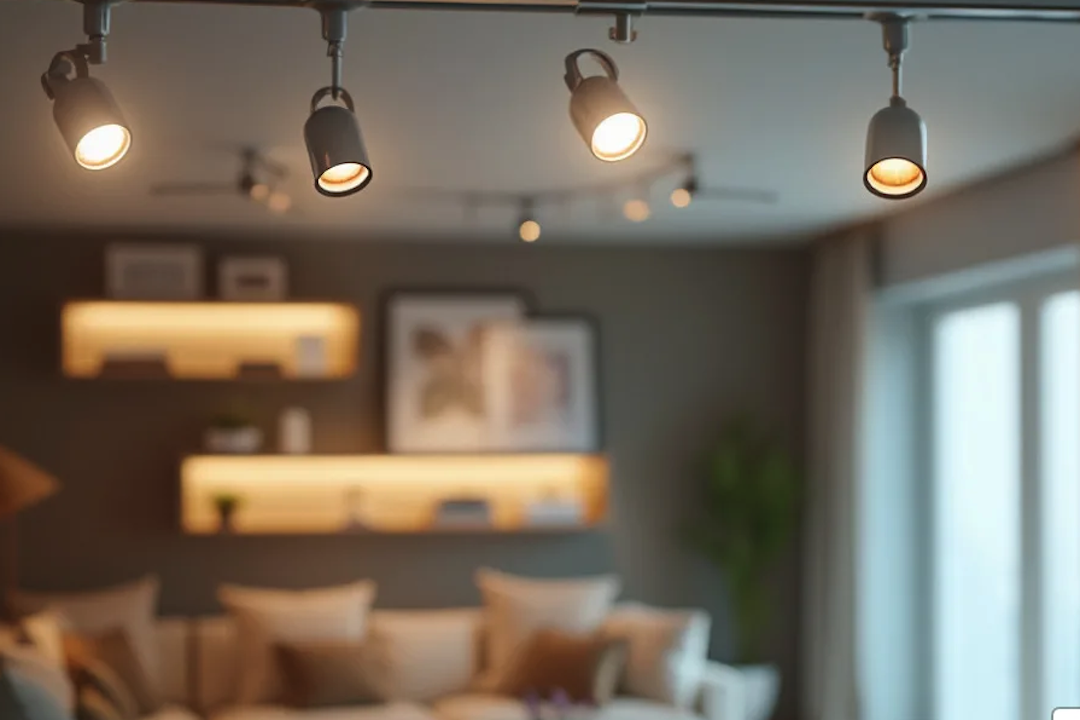
Track lighting is a method of lighting where light Omloa fixtures are attached anywhere on a continuous track device which contains electrical conductors. This allows luminaires to be positioned and repositioned along the track, offering flexibility in light placement. The system typically consists of a track, connectors, power feeds, and various types of light heads.
Track Types and Specifications
Tracks are available in several configurations, each with specific installation and power characteristics. The most common types are line voltage (120V in North America, 230V in Europe) and low voltage (12V or 24V).
Line Voltage Track
Line voltage track, often designated as H, J (or Juno-style), and L (or Lightolier-style) track, refers to the operating voltage of the system directly matching the building’s main electrical supply. These systems are robust and can power a wide range of fixture types, including those with higher wattage lamps. They are widely available and relatively simple to install for a qualified electrician. The primary distinction between H, J, and L tracks lies in their physical cross-section, connector keying, and electrical contact configuration, making them generally incompatible with each other. It is crucial to select components that are specific to the chosen track type to ensure compatibility and safe operation.
Low Voltage Track
Low voltage track systems utilize a transformer to reduce the line voltage to a lower, safer voltage, typically 12V or 24V. This allows for smaller, more discreet fixtures and often enables the use of lamps with narrower beam spreads, which can be advantageous for accentuating small details. However, the transformer adds complexity and cost to the system. While offering a cleaner aesthetic, low voltage systems may have limitations on total wattage capacity due to voltage drop over longer track runs.
Monorail Systems
Monorail systems represent a specialized form of low voltage track lighting. Instead of a rigid, rectangular track, monorail systems use thin, bendable metal rods, often made of copper, to carry electrical current. This allows for greater design flexibility, as the track can be curved or shaped to follow architectural lines or create unique configurations. Monorail systems are generally more aesthetically minimalist and can be particularly effective in contemporary or modern art settings. However, their installation can be more intricate than traditional track systems.
Selecting the Right Light Heads
The choice of light heads is paramount to achieving the desired illumination effects for your artwork. A variety of lamp types, beam angles, and adjustability features are available to cater to diverse artistic mediums and display requirements.
Lamp Technologies
The evolution of lighting technology has provided several options for track lighting, each with distinct advantages and disadvantages in terms of color rendition, energy efficiency, and lifespan.
Halogen Lamps
Halogen lamps, while being phased out in many regions due to energy inefficiency, were historically a popular choice for art lighting. They offer excellent color rendering (typically Ra 95-100), producing a bright, crisp light that faithfully represents true colors. Their compact size and ability to dim smoothly made them highly versatile. However, they generate significant heat and have a shorter lifespan compared to modern alternatives, resulting in higher operating and replacement costs. The heat output can also be a concern for light-sensitive artwork.
LED Lamps
Light Emitting Diodes (LEDs) have become the dominant technology for contemporary lighting applications due to their high energy efficiency, long lifespan (often tens of thousands of hours), and low heat output. Modern LED lamps rival or exceed the color rendering capabilities of halogen, with many options offering high CRI (Color Rendering Index) values, often above 90. They are available in a wide range of color temperatures, from warm white (2700K-3000K) suitable for traditional art to cooler white (4000K+) for contemporary pieces or those requiring neutral illumination. Dimmable LED options are also widely available, though compatibility with existing dimmer switches should be verified. The continuous improvement in LED technology means that the quality and versatility of LED track heads continue to expand.
Other Lamp Types
While less common for dedicated art lighting, other lamp types like fluorescent or metal halide can be adapted to track systems. Fluorescent lamps, known for their energy efficiency, typically have a broader light distribution, making them less ideal for accentuating specific artworks. Metal halide lamps offer high lumen output and good color rendition but are generally larger, have a longer warm-up time, and may have limitations in dimming, making them more suitable for commercial spaces or large-scale installations rather than intimate art displays.
Beam Angles and Optical Control
The beam angle of a light fixture determines the spread of light and is crucial for directing illumination precisely onto the artwork.
Narrow Spot (NS)
Narrow spot beams, typically 10-15 degrees, produce a concentrated pool of light. These are ideal for highlighting small details, creating dramatic accents, or emphasizing texture on three-dimensional objects. They can create strong contrasts and shadows, adding depth to certain installations. However, care must be taken to avoid creating harsh hotspots or glare.
Spot (S)
Spot beams, typically 15-25 degrees, offer a slightly wider spread than narrow spots. They are versatile for illuminating individual artworks or creating a focused pool of light on a section of a larger piece. They provide good definition and can be used to direct attention to specific areas without being overly dramatic.
Flood (FL)
Flood beams, typically 25-40 degrees, distribute light over a broader area. They are suitable for illuminating larger artworks, murals, or entire sections of a wall. Flood lights can create a more even wash of light, reducing harsh shadows and providing general ambient illumination in addition to accent lighting.
Wide Flood (WF)
Wide flood beams, typically 40-60 degrees or more, provide a very broad distribution of light. These are generally used for ambient lighting or for illuminating very large surfaces where a uniform wash is desired. While less common for direct art accentuation, they can play a role in overall gallery illumination.
Adjustable Beam Optics
Some advanced track heads incorporate adjustable optics, allowing the user to precisely tune the beam angle without replacing the entire fixture. This provides unparalleled flexibility, as a single fixture can be adapted to illuminate different sizes of artwork or to create varying effects as exhibits change. These often utilize zoom lenses or interchangeable reflectors.
Installation and Layout Considerations
Effective track lighting for art display requires careful planning of both the physical installation and the strategic placement of light fixtures. The goal is to illuminate the artwork effectively while minimizing distraction and preserving the integrity of the art itself.
Track Placement and Configuration
The positioning of the track system significantly impacts the overall lighting effect. Consider the viewing angles, ceiling height, and room dimensions.
Ceiling-Mounted Track
The most common installation method involves mounting the track directly to the ceiling. This provides a clean aesthetic and positions the light sources above the artwork, mimicking natural overhead light. For optimal results, tracks are often positioned approximately one-third of the distance from the wall to the center of the room. This allows for a good angle of incidence for the light, reducing glare and casting appropriate shadows. In rooms with high ceilings, suspension rods can be used to lower the track to a more effective height. Ensure proper structural support for the track, especially if using longer, heavier runs.
Wall-Mounted Track
While less common for direct art illumination, track can also be mounted on walls. This can be architecturally interesting and may be useful for illuminating sculptures from the side or for tasks where overhead lighting is not feasible. However, wall-mounted track can be more visually intrusive and may present challenges in aiming lights effectively without creating glare for viewers.
Recessed Track
Recessed track systems integrate the track flush with the ceiling, offering a minimalist and unobtrusive appearance. The track itself is hidden, with only the light heads extending below the ceiling plane. This is often seen in high-end galleries or contemporary homes where a clean aesthetic is prioritized. Installation of recessed track is more complex and typically requires professional contractors during the construction or major renovation phase. It offers the most seamless integration into the architectural design.
Track Layout Patterns
Tracks can be arranged in various patterns to suit the room layout and display requirements. A single straight run parallel to a wall is common for linear displays of artwork. U-shaped or L-shaped layouts can accommodate corner displays or multi-wall galleries. Grid patterns, using multiple intersecting tracks, offer maximum flexibility for changing displays in larger spaces, allowing lights to be positioned virtually anywhere within the grid. When planning layouts, consider the electrical load capacity of each track section and ensure proper power feed placement.
Power Feeds and Electrical Requirements
Proper electrical planning is crucial for safety and functionality. Track lighting typically requires a dedicated circuit.
End Feeds and Canopy Feeds
Power feeds are the components that connect the track to the electrical supply. End feeds provide power at the very end of a track section, while canopy feeds allow for power to be brought in at any point along the track, often centrally, where an existing junction box might be located. The choice depends on the electrical wiring in the ceiling and the desired aesthetic. It is essential to ensure that the total wattage of all light heads on a single circuit does not exceed the circuit’s capacity (e.g., a 15-amp circuit typically supports up to 1800 watts).
Dimmers and Controls
Incorporating dimmers is highly recommended for art lighting, allowing you to adjust the intensity of the light to suit different artworks, ambient light conditions, or desired moods. Ensure that the dimmer switch is compatible with the chosen lamp technology (e.g., LED dimmers for LED lamps). Advanced control systems, such as smart home integration or DMX for professional installations, can offer greater flexibility in adjusting individual fixtures or creating pre-programmed lighting scenes.
Aiming and Focusing for Optimal Effect
Once installed, the art and science of aiming track lights come into play. This is where subtle adjustments can transform an average display into a captivating presentation. The goal is to illuminate the artwork without causing glare, creating distracting shadows, or damaging the art itself.
The 30-Degree Rule
A common guideline for lighting artwork is to aim the light source at an angle of approximately 30 degrees from the vertical plane of the artwork. This angle generally minimizes direct glare reflected into the viewer’s eyes while still providing sufficient illumination.
Reducing Glare
Light aimed too directly at a glossy artwork can create a distracting hot spot. Conversely, light aimed too obliquely can cause significant shadows from the frame or canvas texture. The 30-degree angle often provides a sweet spot. Experiment with the angle to see what works best for your specific piece and viewing height. For highly reflective surfaces, a slightly wider angle (e.g., 35-40 degrees) might be necessary, or consider using light sources with greater diffusion.
Enhancing Texture
For textured artwork, such as impasto paintings or sculptures, a slightly more acute angle (e.g., 20-25 degrees) can be used to emphasize the three-dimensionality and cast subtle shadows that enhance depth. This technique, often called “raking light,” can dramatically highlight surface variations. However, be cautious not to create overly dramatic or unnatural shadows that detract from the artwork.
Addressing Shadows and Hotspots
Unwanted shadows and hotspots can detract from a viewer’s appreciation of artwork. Careful aiming and selection of luminaires can mitigate these issues.
Eliminating Frame Shadows
When lighting framed artwork, ensure the beam is wide enough to illuminate the entire piece without casting shadows from the frame onto the art itself. This often means adjusting the distance of the light from the wall and the beam angle. Sometimes, using multiple fixtures with slightly overlapping beams can help eliminate persistent frame shadows.
Achieving Uniform Illumination
For a single artwork, aim for even illumination across the entire surface. This may involve repositioning the light head, adjusting the beam angle, or even using a fixture with a flood beam. If an artwork is particularly large, multiple adjacent fixtures with overlapping beams might be necessary to avoid dark spots or hot spots. For a series of artworks, strive for consistency in their illumination, maintaining a similar brightness and color temperature across the display.
Controlling Hotspots
Hotspots, or intensely bright areas, can occur if a narrow beam is too close to the artwork or if the light source is too powerful. Adjusting the distance, widening the beam, or substituting a lower wattage lamp can resolve this. Alternatively, using a light head with a diffusion filter can soften the light and reduce specular highlights.
Maintenance and Preservation
Proper maintenance of your track lighting system not only ensures longevity and consistent performance but also plays a crucial role in the preservation of your valuable artworks. Light, particularly certain wavelengths, can cause irreversible damage over time.
Lamp Replacement and Cleaning
Regular cleaning and timely lamp replacement are fundamental to maintaining optimal light quality.
Cleaning Light Fixtures
Dust and debris can accumulate on light heads, reflectors, and lenses, reducing light output and potentially altering the color temperature. Regularly (e.g., quarterly or semi-annually, depending on environment) cleaning these components with a soft, dry, lint-free cloth is recommended. For more stubborn grime, a slightly damp cloth with mild, non-abrasive cleaner can be used, ensuring the fixture is unplugged and fully dry before re-energizing. Avoid harsh chemicals that can damage finishes or optical coatings.
Lamp Replacement Protocols
When a lamp (bulb) fails or significantly degrades in performance (e.g., dimming, color shift), it should be replaced promptly. Always use replacement lamps that match the specifications (voltage, wattage, base type, beam angle) of the original or those recommended by the fixture manufacturer. For LED lamps, which have extremely long lifespans, replacement is less frequent, but if a module fails, often the entire LED engine or fixture head must be replaced rather than just a bulb. When handling halogen lamps, avoid touching the glass with bare hands, as oils can create hot spots and shorten lamp life; use a clean cloth or gloves.
UV and IR Filtering
Ultraviolet (UV) and Infrared (IR) radiation, even from seemingly benign light sources, can be detrimental to artwork.
UV Protection
UV radiation can cause pigments to fade, paper to yellow, and textiles to degrade over time. Many modern LED lamps are inherently low in UV output. However, for older halogen or incandescent systems, or when specific art types are particularly sensitive, UV filters can be incorporated into the light fixtures. These are typically clear, specialized filters placed over the lamp or within the fixture’s optical path. When selecting new LED lamps for art, prioritize those explicitly marketed as having low or no UV emissions.
IR Heat Mitigation
Infrared radiation, while not directly causing fading, generates heat. Prolonged exposure to heat can accelerate the degradation of organic materials in artwork, causing brittleness, cracking, or desiccation. Halogen lamps are particularly high in IR output. Modern LED lamps produce significantly less heat. For sensitive artworks, maintaining a distance between the light source and the artwork, using LED lamps, or incorporating IR-reducing components (like dichroic reflectors that direct heat away from the illuminated object) can help. Additionally, ensuring good air circulation around the artwork can aid in heat dissipation.
Light Levels and Duration
Managing the intensity and duration of light exposure is critical for the long-term preservation of artwork.
Recommended Light Levels
Different types of artwork have varying sensitivities to light. Highly sensitive materials like textiles, watercolors, photographs, and historical documents should be exposed to very low light levels, typically 5-50 lux (lumens per square meter). Moderately sensitive materials like oil paintings, acrylics, and untreated wood can tolerate slightly higher levels, around 50-150 lux. Insensitive materials like metal, stone, ceramic, and glass can withstand higher illumination, often up to 300 lux or more. It is advisable to use a light meter to measure light levels directly on the artwork’s surface.
Limiting Exposure Duration
Even at recommended light levels, continuous exposure can lead to cumulative damage. For highly sensitive pieces, consider limiting the duration of illumination. This might involve using dimmers to reduce light levels when the artwork is not being actively viewed, implementing timers to turn off lights during unoccupied hours, or using motion sensors in private collections to illuminate only when an observer is present. Rotating artworks in and out of display, allowing periods of rest in dark storage, is also a strategy employed by professional conservators. The total light “dose” over an artwork’s lifetime is a primary concern for preservation.