Exploring Space Age Aesthetics with Colorful Glass Pendants
The Space Age, a period predominantly spanning from the mid-20th century to the late 1960s and early 1970s, profoundly influenced various aspects of design, art, and architecture. This era, characterized by optimism, technological advancement, and a fascination with exploring the cosmos, fostered a distinct aesthetic that continues to resonate today. Architects, designers, and artisans sought to capture the spirit of innovation and the allure of other worlds through new materials, bold forms, and experimental color palettes. Among the many design elements that emerged from this period, colorful glass pendants stand out as particularly emblematic, encapsulating the Space Age’s unique blend of futuristic vision and material exploration.
While the term “Space Age” often conjures images of streamlined rockets and lunar modules, its aesthetic translation into everyday objects was far more nuanced. Designers embraced organic curves, geometric precision, and an often playful interpretation of scientific motifs. This article will delve into the characteristics of Space Age aesthetics and specifically explore how colorful glass pendants Lamolighting embody and reflect this distinctive design movement.
The Space Age as a cultural phenomenon was primarily ignited by the Soviet Union’s launch of Sputnik 1 in 1957, followed by the American response and the subsequent “Space Race.” This intense period of scientific and technological competition between the United States and the Soviet Union captivated public imagination. The constant stream of news about rockets, satellites, and astronauts fueled a collective dream of transcending earthly limitations and venturing into the unknown.
Designers of the era, inspired by these monumental achievements, began to integrate principles found in aerospace engineering and astronomy into their work. The sleek, utilitarian lines of spacecraft, the vibrant hues of celestial bodies, and the conceptual grandeur of interstellar travel all found their way into furniture, fashion, and lighting. Materials like plastic, fiberglass, and chrome, previously considered industrial, gained widespread acceptance for their ability to evoke a sense of the future.
Key Influences on Space Age Design
Several factors contributed to the evolution of Space Age aesthetics:
- Technological Advancement: The rapid development of new materials and manufacturing processes allowed designers to experiment with unprecedented forms and finishes. Plastics, in particular, offered malleability and a range of colors previously unavailable.
- Scientific Discovery: Images from space, once purely speculative, became tangible realities through photography. The mesmerizing patterns of nebulae, the stark contrast of planets against the black void, and the vibrant glow of rocket exhausts provided a rich source of inspiration.
- Optimism and Progress: The post-World War II economic boom fostered a sense of progress and futurism. There was a widespread belief that technology would solve many societal problems and lead to a brighter future, an ethos reflected in the optimistic and often utopian designs of the era.
- Popular Culture: Science fiction films, books, and television shows, such as 2001: A Space Odyssey and Star Trek, played a significant role in popularizing Space Age themes and imagery, further embedding them in the public consciousness.
Characteristic Elements of Space Age Design
Space Age design is identifiable by a distinct set of characteristics that differentiate it from previous design movements. When you encounter an object from this period, you will likely observe elements that speak to a forward-looking perspective.
Forms and Silhouettes
Space Age designs often feature:
- Aerodynamic Shapes: Curved, streamlined forms that suggest movement and efficiency, reminiscent of rockets and spacecraft. Think of objects that appear to defy gravity or gracefully glide.
- Geometric Precision: The use of circles, spheres, ovals, and cones, reflecting mathematical and scientific principles. These forms often created a sense of order and futuristic simplicity.
- Organic Curves: While geometric, many designs incorporated soft, flowing lines that evoked a sense of natural movement, often in contrast to the rigid lines of earlier modernism.
- Modular and Stackable Elements: A reflection of efficiency and adaptability, allowing for flexible configurations and space-saving solutions.
Materials and Textures
The material palette of the Space Age was crucial in conveying its aesthetic. Designers actively sought out and utilized new materials that offered novel properties:
- Plastics (e.g., ABS, PVC, Fiberglass): Lightweight, durable, and moldable, plastics were instrumental in producing the iconic shapes and vibrant colors of the era. They allowed for mass production of complex forms, making futuristic design accessible.
- Chrome and Polished Metals: These materials provided a reflective, sleek, and often mirror-like surface, conjuring images of spacecraft exteriors and technological sophistication.
- Glass: Not only for its transparency, but also for its ability to be molded and colored, creating translucent and luminous effects. The advent of new glass-making techniques facilitated innovative forms and vibrant hues.
- Lucite and Acrylic: Transparent plastics that offered a lighter alternative to glass, often used for furniture and decorative elements.
Colorful Glass Pendants as Space Age Emblems
Within the broader context of Space Age aesthetics, colorful glass pendants emerge as particularly potent symbols. They encapsulate many of the movement’s defining characteristics, functioning not merely as light sources but as sculptural objects that evoke a sense of the cosmic.
The Allure of Colored Glass
Colored glass, while not unique to the Space Age, experienced a resurgence and reinterpretation during this period. The ability to manipulate glass into complex, often spherical or ovoid forms, and saturate it with vivid, almost otherworldly colors, made it an ideal medium for expressing Space Age ideals.
- Celestial Hues: Pendants often featured colors that echoed nebulae, distant planets, or the shimmering atmosphere of Earth as seen from space. Deep blues, emerald greens, fiery oranges, and cosmic purples were common, often in translucent or opaque finishes.
- Light as a Cosmic Phenomenon: The way light interacted with colored glass was central to its appeal. As light passed through or was reflected by the glass, it created dynamic visual effects, mimicking the ethereal glow of celestial bodies or the propulsion of rockets.
- Sculptural Presence: Beyond their function, these pendants were designed to be sculptural elements, occupying space and drawing the eye even when unlit. Their forms often mimicked planets, orbits, or abstract cosmic formations.
Iconic Designers and Examples
Many designers embraced glass in their Space Age lighting creations. While specific attribution can sometimes be challenging due to the collaborative nature of design houses and mass production, certain styles and forms became synonymous with the era.
- Verner Panton: Though primarily known for his furniture, Panton’s lighting designs, particularly his “VP Globe” pendant, exemplify the Space Age’s use of spheres and new materials. While not always colored glass, his designs often incorporated colored acrylic and light-diffusing elements that created similar visual effects.
- Murano Glassmakers: Italian glassmakers, particularly those on the island of Murano, adapted their ancient techniques to new demands. They produced elaborate and brilliantly colored glass pendants, often featuring swirling patterns, internal bubbles, or layered compositions that fit perfectly within the Space Age aesthetic. Their mastery of Venetian glass techniques allowed for unparalleled richness in color and form.
- Mid-Century Modern Manufacturers: Companies like Artemide, Guzzini, and Stilnovo produced numerous lighting fixtures that captured the Space Age spirit. Their designs often featured transparent or translucent colored acrylics and glass, often in bold, geometric or spherical forms.
The Form Language of Space Age Glass Pendants
Let’s examine the specific formal characteristics that make these pendants so evocative of the Space Age. As you observe these pieces, you’ll see how they translate abstract scientific concepts into tangible objects.
Spheres and Orbits
The sphere is perhaps the most ubiquitous form in Space Age glass pendants. It represents:
- Planetary Bodies: The most direct association, conjuring images of Earth, the Moon, and other planets.
- Cosmic Wholeness: A symbol of perfection, infinity, and the vastness of the universe.
- Optical Illusions: Spherical glass can distort light and reflections, creating mesmerizing effects that mimic astronomical phenomena.
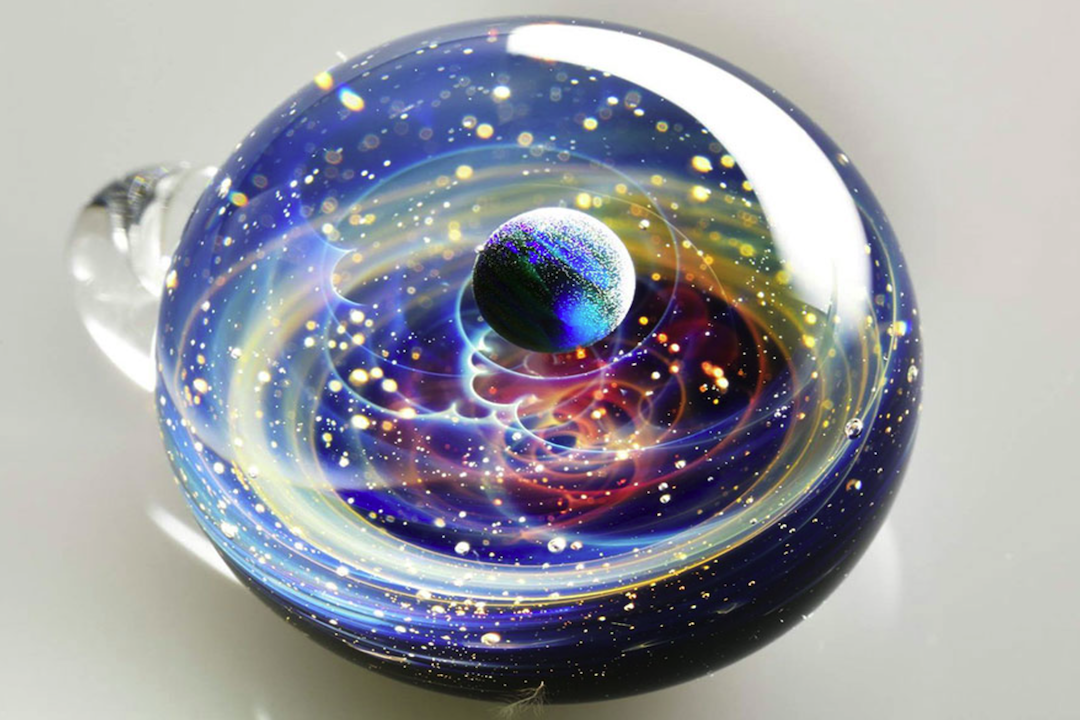
Often, these spheres are suspended individually or in clusters, sometimes incorporating smaller spheres or rods that suggest planetary orbits or intricate molecular structures. Imagine a cluster of vibrant glass spheres, each a miniature planet, suspended in orbit around a central light source—a small, personal galaxy.
Rocket Silhouettes and Trajectories
While less literal than spheres, some pendants subtly allude to rocket forms or flight paths:
- Elongated or Conical Shapes: These forms echo the aerodynamic design of rockets and missiles, suggesting upward motion and forward propulsion.
- Layered and Tiered Designs: Pendants composed of multiple stacked glass elements can create a sense of trajectory or ascent, with each layer representing a stage of a journey.
- Dynamic Angles: Suspensions featuring diagonal lines or asymmetric arrangements can imply movement and dynamism, a departure from more static, traditional chandeliers.
Abstract Cosmic Interpretations
Many Space Age glass pendants move beyond direct representation, instead opting for abstract interpretations of cosmic themes. These designs capitalize on the inherent properties of glass to create ethereal effects:
- Swirling Patterns and Inclusions: Internal patterns within the glass, achieved through various glassblowing techniques, can evoke nebulae, galaxies, or swirling gas clouds in space.
- Iridescent and Opalescent Finishes: These finishes mimic the play of light on atmospheric dust or the shimmering surfaces of distant celestial objects, creating a sense of wonder and otherworldliness.
- Translucent Layers: Multiple layers of colored glass, either fused or distinct, create depth and allow for complex color mixing when illuminated, reminiscent of light filtering through different atmospheric layers.
The Enduring Appeal and Legacy
The Space Age ended as cultural priorities shifted, but its aesthetic influence never truly disappeared. Colorful glass pendants from this era continue to be highly sought after by collectors and interior designers. Their enduring appeal lies in several factors.
Timeless Futurism
The visions of the future presented during the Space Age, while grounded in the mid-20th century, often remain surprisingly fresh. The focus on clean lines, innovative materials, and a sense of optimism can transcend specific technological predictions.
- Adaptability to Modern Interiors: The bold yet often simple forms of these pendants allow them to integrate seamlessly into contemporary interior design, providing a touch of vintage flair without appearing dated. They often serve as statement pieces in minimalist or industrial spaces.
- A Nod to Optimism: In times of uncertainty, the optimistic outlook embedded in Space Age design can offer a refreshing counterpoint, reminding us of a period when humanity gazed at the stars with boundless hope.
Craftsmanship and Material Innovation
Many Space Age glass pendants are not just mass-produced items; they represent significant advancements in glassmaking and design.
- Technological Marvels: At the time of their creation, producing these forms and colors in glass often required cutting-edge techniques and skilled artisans. This combination of industrial innovation and artistic craftsmanship adds to their value.
- Material Exploration: These pieces serve as historical markers of a period when designers were actively pushing the boundaries of what was possible with new and existing materials, particularly glass and plastics.
The Collector’s Perspective
For collectors, Space Age glass pendants offer a unique segment of design history.
- Rarity and Provenance: Well-preserved examples, especially those from renowned designers or manufacturers, command significant value. Understanding the history and origin of a piece adds to its allure.
- Investment Potential: As interest in mid-century modern and Space Age design continues to grow, these pieces often appreciate in value, making them attractive investments for design enthusiasts.
In conclusion, colorful glass pendants are more than just lighting fixtures; they are tangible expressions of a pivotal moment in human history. They embody the awe, ambition, and artistic innovation that defined the Space Age. By examining their forms, materials, and the spirit they evoke, you gain a deeper appreciation for how designers translated cosmic visions into objects that continue to illuminate and inspire. They stand as vibrant artifacts of humanity’s enduring quest to explore, understand, and ultimately, bring the wonders of the universe into our everyday lives.